

By 2035, only about one in eight family businesses are expected to be run by the family itself. Today, it’s almost half.
That’s one of the findings of the KPMG Global Family Business Report 2026, which surveyed 1,927 family business leaders across 41 countries. It points to a quiet but significant shift: more outside expertise at the leadership table, and more decisions made by people who weren’t there at the start.
Marketing is one of those decisions. Not the day-to-day work, which most businesses have well in hand, but the leadership of it.
Who should lead marketing in a family business?
Someone qualified and experienced, who can connect your business strategy to your marketing, and your marketing to growth. Their job is direction rather than delivery: who you’re for, what you stand for, where the money goes and how you’ll know it’s working. That might be a family member with the right expertise, a full-time marketing director or a part-time senior leader.
What’s the difference between doing marketing and leading it?
Doing marketing is the work you can see: the website, the ads, the social posts, the trade show, the brochure. Most family businesses do plenty of it, and many do it well.
Leading marketing is the thinking behind it. Which customers you want more of, and which you’re happy to let go. What the name should stand for in ten years’ time. Where to invest, what to stop, and how marketing supports the business plan rather than running alongside it.
That’s where senior expertise earns its place. Good tactical work makes the business visible. Strategic leadership decides where it’s going.
Why does marketing leadership get overlooked as a business grows?
Because for a long time, it didn’t need to be separate. Many family businesses grew on reputation, relationships and word of mouth, and the founder was the brand.
Roles grew around people rather than functions. Someone good with numbers took on the accounts. Someone good with people took on sales. Marketing was often shared around, and judged by what got done rather than where it was taking the business.
And bringing in a senior marketer can feel like a big step. Who would they report to? Would they understand what makes the business special? Would they try to change it?
What happens when no-one leads marketing?
Usually nothing dramatic. That’s the problem. The brand drifts and means slightly different things to different people. Money goes to whoever asks loudest or whichever opportunity turns up. Customers change faster than the marketing does. And the next generation inherits a brand nobody has ever properly defined.
The family name opens the door. It doesn’t keep it open.
What are the signs you need marketing leadership?
These are the six we see most often, and the question worth asking at each.
1. Marketing isn’t part of the big decisions
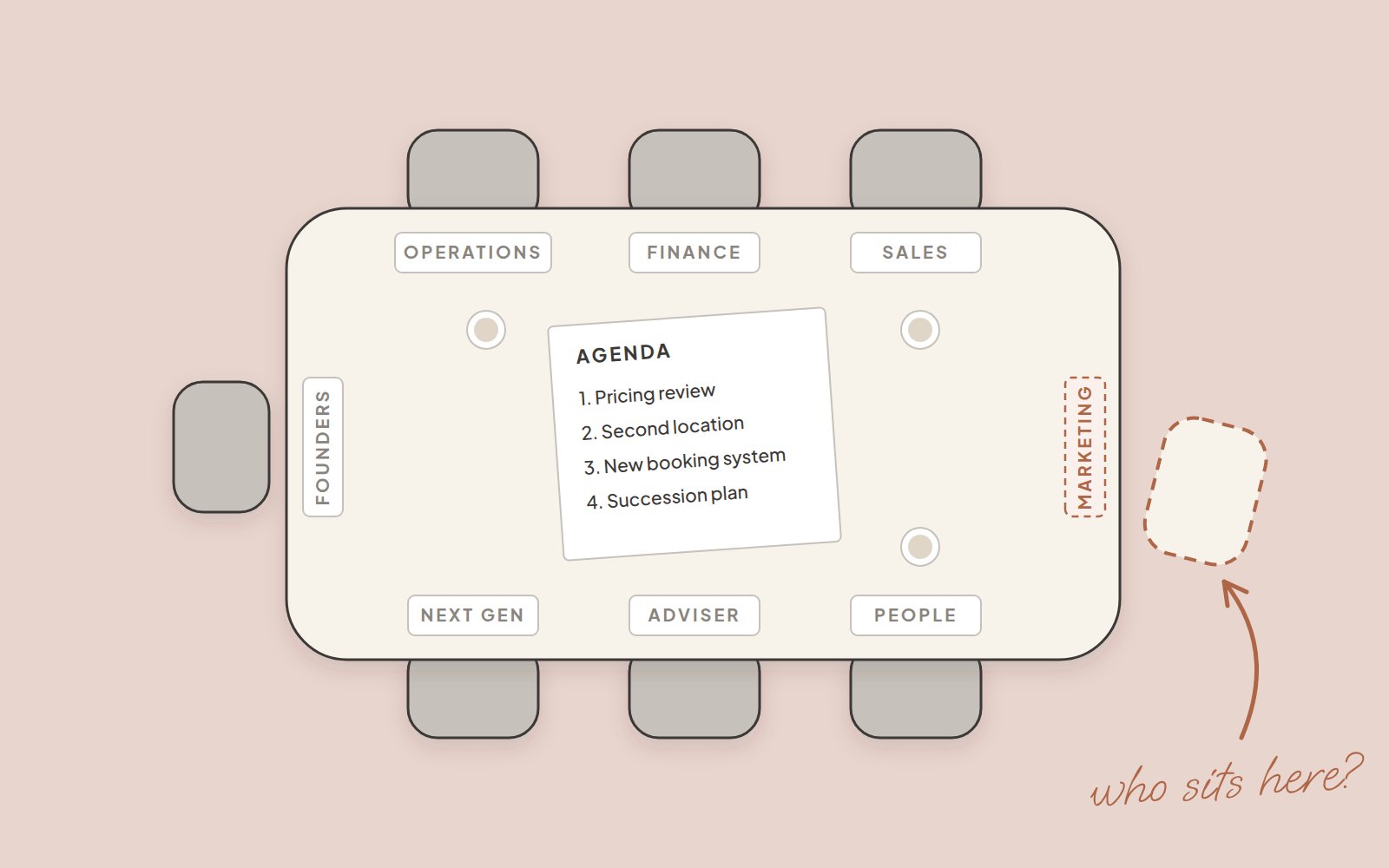
Finance reports to the owners every month. Operations has a plan for the year. Marketing is brought in once the decision has been made, to promote it. If no-one with marketing expertise is in the room when you set prices, choose new markets or decide where to invest, marketing can only ever react.
Ask: When we make our biggest business decisions, who speaks for the customer and the brand?
2. It’s all output, and no strategy
Marketing is judged by what it produces: the posts, the ads, the brochures, the events. There’s plenty of it. What’s missing is a clear view of what it’s meant to achieve, so there’s no way to tell whether it’s working.
Ask: Do we judge our marketing by how much it produces, or by what it changes?
3. The agency is setting the direction
A good agency is a great asset. But if no-one inside the business is briefing them, challenging them and judging the work against business goals, they end up steering by default.
Ask: Who briefs our agency, and who pushes back?
4. A big change is coming
Opening a new location, launching a new product, moving into a new market or handing the business to the next generation. Each of these changes who your customers are or what they expect from you. They’re the moments when marketing needs someone thinking ahead, not just keeping up.
Ask: What’s changing in our business over the next three years, and is our marketing ready for it?
5. Customer experience and technology are decided piece by piece
Leading marketing goes well beyond advertising. It includes how customers experience your business and the technology behind it. Picture a new booking system chosen by operations, a website updated by one supplier and customer emails run by another. Each decision makes sense on its own. Together, customers are asked for the same details twice, enquiries slip through the gaps and the experience doesn’t feel like the business they know.
Ask: Who looks at our customer experience and our technology as one picture?
6. You can’t say what the marketing is buying
If the spend keeps going up but no-one can link it to new customers, better margins or a stronger reputation, there’s no-one holding marketing to a commercial standard.
Ask: What did last year’s marketing actually deliver for the business?
What are the options if you don’t need a full-time director?
Marketing leadership comes in more shapes than a job title. The right one depends on your size, your ambition and how much change is ahead.
Grow someone from within. A capable person in the business, often family, given real ownership, a budget and senior support while they build the skills. It keeps knowledge in the family, but they need someone experienced to learn from.
Hire a full-time marketing director. Right when the business is large enough, the opportunity is big enough and there’s enough work to fill the role. It’s a significant investment, and it takes time to find the right fit.
Bring in a fractional marketing leader. Senior experience for a few days a month, setting direction, leading the team and agencies, and reporting to the owners. We explain how that works in What does a Fractional CMO actually do?
Add marketing to the advisory table. An experienced marketer on your advisory board or family council makes sure marketing is part of the big decisions, even if the day-to-day sits elsewhere.
What should a family business look for in a marketing leader?
Respect for what’s been built. The best marketing leaders understand that the family’s values, relationships and reputation are assets, not baggage. They build on them rather than starting again.
After that, look for someone commercial, who talks about customers, margins and growth before campaigns and clicks. Someone who can hold their own in a room with the founders, and tell them what they need to hear kindly. And someone who builds the capability of your people, so the business is stronger when they step back.
So, who should lead marketing in a family business?
Someone with the qualifications and experience to link strategy, marketing and growth, and trusted enough to be listened to. Whether that’s a marketing director, a family member with the right support, or a senior partner for a few days a month depends on where the business is heading. What matters is that someone owns it, and everyone knows who it is.
Everyone’s job is no-one’s job.
If you’d like to talk through what marketing leadership could look like in your business, let’s start the conversation.
