It’s budget time. Someone pulls up the marketing line, and it has crept up again. The agency report is full of green arrows: more reach, more clicks, more leads. Then someone asks why revenue has barely moved, and the room goes quiet.
Nobody has wasted the money on purpose. But somewhere between the spend and the sales, it has stopped adding up.
Why isn’t our marketing spend turning into growth?
Usually because the money is funding activity rather than a clear growth outcome. It’s spread too thin, measured by what it produces instead of what it earns, or spent fixing a problem that isn’t marketing’s to fix. More spend makes things louder. It doesn’t make them work.
It matters more than ever. In Gartner’s 2025 CMO Spend Survey, marketing budgets flatlined at 7.7% of company revenue, and most marketing leaders said they didn’t have enough to deliver their strategy. When budgets aren’t growing, every dollar has to work harder.
Where does marketing spend usually leak?
These are the five leaks we see most often, and the question worth asking at each.
1. It’s paying to fix a problem that isn’t marketing’s
“We need more leads” is often the first answer when growth slows. But if the real issue is the product, the price, the sales process or a market that has moved, more marketing can’t fix it. It just spends more money putting the problem in front of more people.
Ask: If we doubled the marketing budget tomorrow, what would actually change?
2. It’s buying leads, not customers
Lead numbers are easy to grow and easy to report. But a lead isn’t revenue. If enquiries are up and sales aren’t, the money may be attracting the wrong people, or losing the right ones somewhere between the enquiry and the sale.
Ask: What did each new customer cost us, not each lead?
3. It’s spread too thin
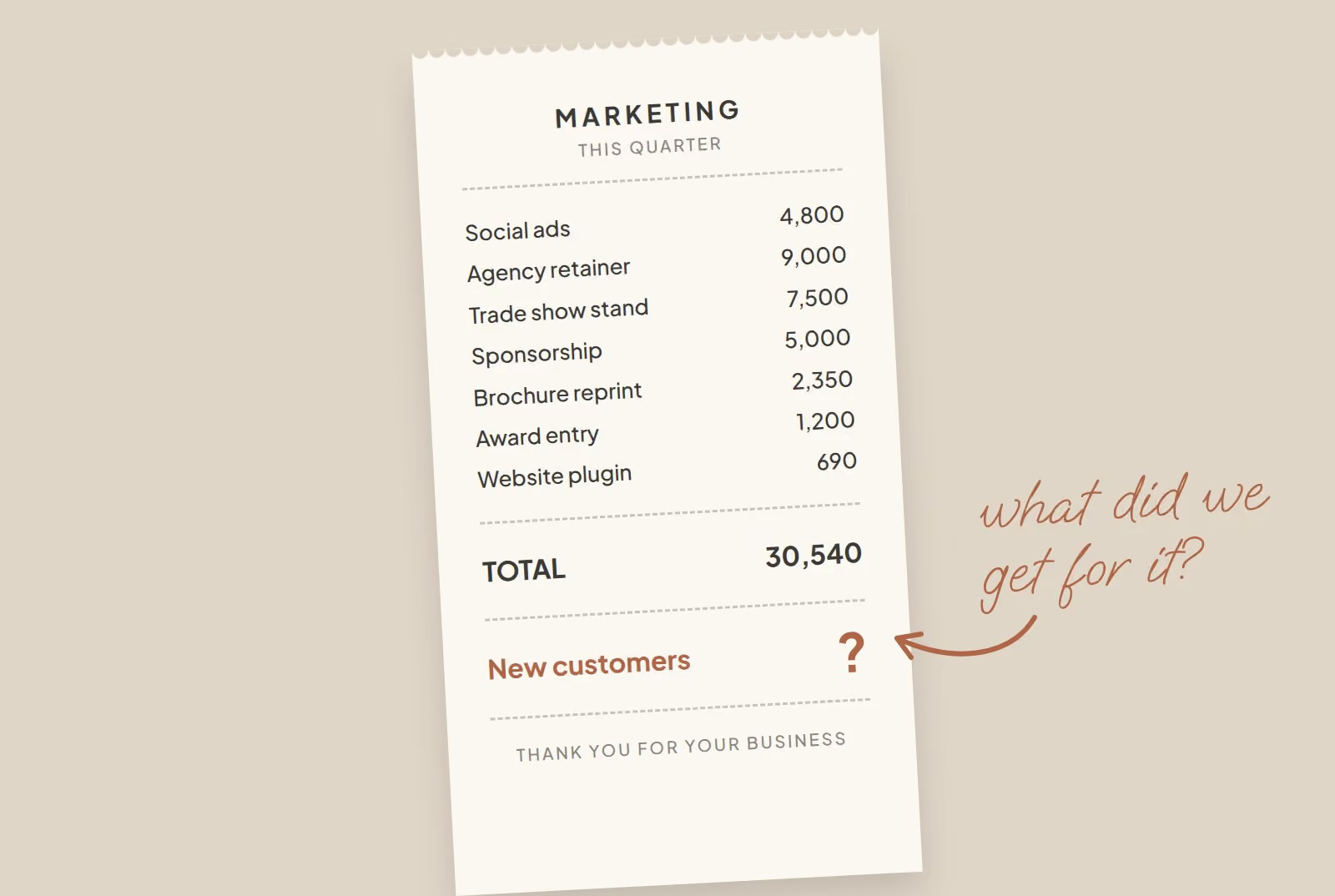
A little on social, a little on search, a sponsorship, a trade show, an award entry. Each one seems sensible on its own. Together, nothing gets enough to make a real difference, and no-one can say which part is working.
Ask: If we could only fund two things, which two would they be?
4. It’s funded by habit
Many marketing budgets start with last year’s plan plus a little more. The same events, the same retainer, the same brochure reprint. Some of it still earns its place. Some of it is there because nobody has asked the question.
Ask: What are we paying for because we always have?
5. It’s buying attention without a reason to choose you
Media can make you visible. It can’t make you different. If customers can’t see why they should choose you over the next business, more spend simply amplifies a message that isn’t landing.
Ask: Are we paying to be seen, or to be chosen?
What should you measure instead?
Not less, just closer to the money. Reach is useful, but new customers matter more. Lead volume matters less than how many become customers and what each one cost. Engagement is interesting; repeat business and customer value pay the bills.
Your marketing reports should be able to answer one plain question at every leadership meeting: what did this spend return to the business? If they can’t, change the reports before you change the budget.
Should you spend more on marketing, or less?
Sometimes less, at least at first. Stop the campaigns that aren’t working. Stop producing content nobody reads. Stop reporting numbers that don’t change a decision, and stop adding channels just because competitors are on them. Then put the money you’ve freed up behind the few things with the clearest return.
Clarity creates focus. Focus creates momentum.
How do you make your marketing spend work harder?
Start by agreeing what growth means for your business, in one or two numbers: new customers, revenue from existing customers, margin. If the leadership team can’t agree, marketing can’t be expected to deliver it.
Then review every line of the budget against those numbers. What are we funding, why, what do we expect it to achieve, and what tells us it’s working? Finally, put marketing and the commercial results on the same page, reviewed together, so the spend and the return are always in the same conversation.
So, why isn’t your marketing spend turning into growth?
Because spend on its own doesn’t create growth. Clear choices do. The businesses that get the most from their marketing aren’t always the ones spending the most. They know what they’re buying, why, and what it’s earning.
And if you’re not sure the problem is marketing at all, start with What’s getting in the way of your growth?: seven places to look across the whole business.
If you’d like a second pair of eyes on where your marketing money is going, a Clever Fix is a good place to start.