It’s Monday’s management meeting, and marketing gives its update. Multiple campaigns in market. Forty posts last month. A new landing page, a refreshed brochure, the agency report. Then someone asks the question nobody quite wants to answer: what has all that done for the business?
The team is working hard. That isn’t in doubt. But somewhere along the way, effort and progress have stopped being the same thing.
Why is my marketing team busy but the business isn’t moving forward?
Usually because the team is spending its time responding rather than deciding. Marketing has become the place where requests go, and no-one is setting direction, choosing priorities or connecting the work to what the business needs. It’s rarely a problem of effort. It’s a problem of clarity, priorities and leadership.
It isn’t just marketing. Asana’s Anatomy of Work research, a survey of more than 10,000 knowledge workers including in Australia, found people spend less than a tenth of their working day on strategy.
How does a marketing team end up so busy?
Gradually, and with the best intentions. The business grows. Someone starts the social media. Then email, then paid ads, then the CRM. A new product launches, sales needs support, leadership wants a campaign, and someone asks for a new website. The team keeps up. More people join, more agencies appear.
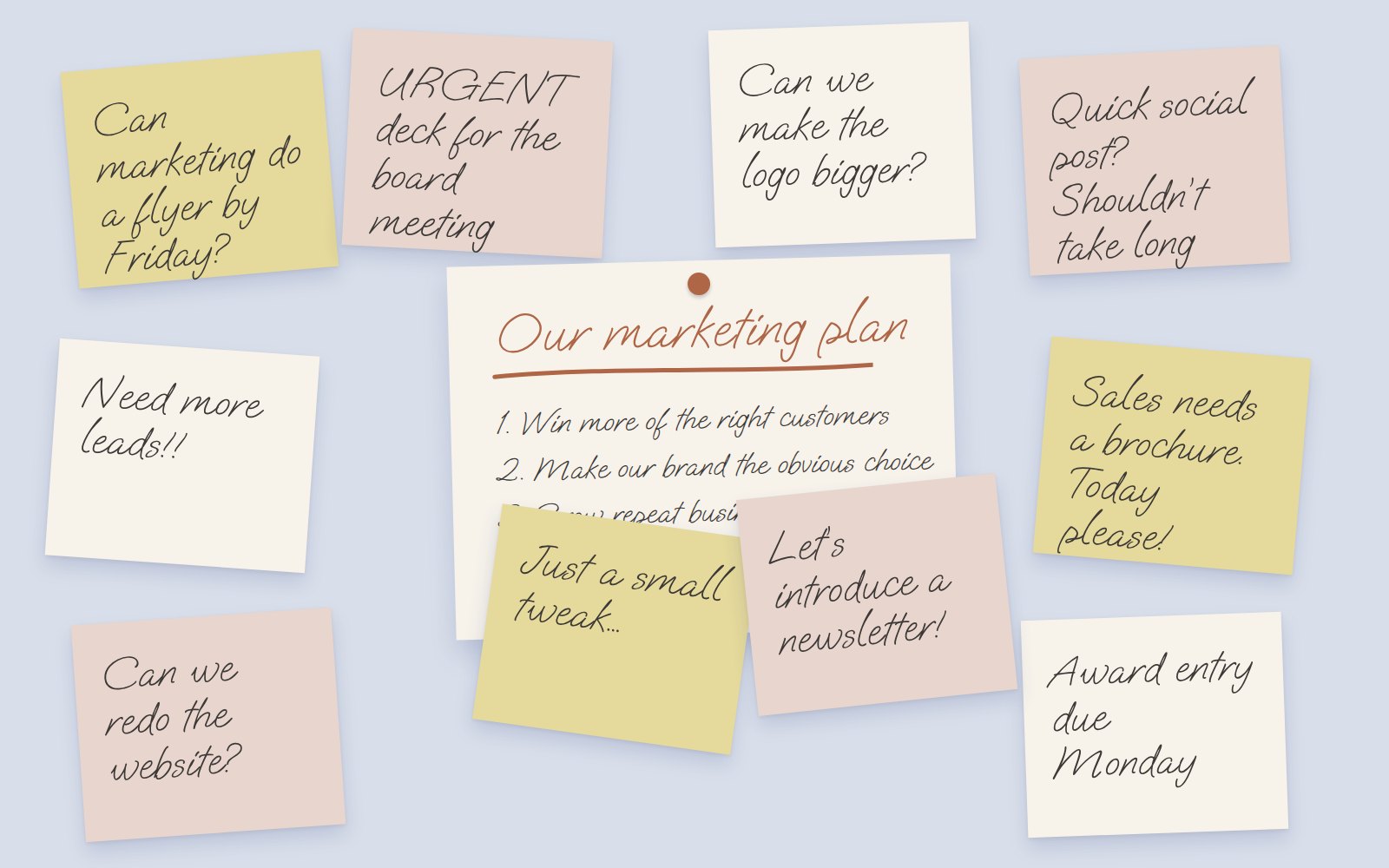
And quietly, marketing becomes the answer to every request. Need a presentation? Marketing. Need more leads? Marketing. Need something for the sales team by tomorrow? Marketing.
Eventually the team becomes very good at responding to the business, and less able to lead it.
Tactical marketing asks what needs to be done. Strategic marketing asks what needs to change.
What are the signs your marketing team has become too tactical?
These are the five we see most often, and the question worth asking at each.
1. Everything is urgent
If everything is a priority, nothing is. A strategic team can make choices: this matters most, this can wait, this isn’t worth doing. Without clear priorities, the work goes to whoever asks loudest or whichever deadline is closest.
Ask: What are we saying no to this quarter?
2. Reports show what was done, not what changed
You may know exactly how many campaigns launched last quarter. It’s harder to say which ones changed what customers did, which ones should be repeated and which should stop. A tactical team reports what it did. A strategic team explains what it learned and what should happen next.
Ask: What did we learn, and what should we stop?
3. Planning starts with channels
If every planning conversation begins with “should we do Meta?” or “should we make a video?”, it’s starting too far downstream. Channels are how you deliver a decision, not the decision itself. Start with who you’re trying to reach and what you want them to do, then choose the channels.
Ask: Who are we trying to influence, and what do we want them to do?
4. Nobody has time to think
Ask your team when they last had a full day away from deadlines to think about the business: customers, competitors, what’s working and what’s changing. If the answer is “I can’t remember”, they can only ever respond to what’s directly in front of them.
Ask: When did our team last step back from the work to look at the business?
5. Your most senior marketer has become a project manager
In many growing businesses, the person leading marketing is buried in agencies, approvals, budgets and deadlines. They understand the detail, but have no time to look up: at where the business is going, what customers need and where marketing could make the biggest difference. Good marketing leaders do both.
Ask: Who in our business is looking up, not just down?
Does a busy marketing team need more people?
Sometimes. But a bigger tactical team can simply produce more tactical work. Before adding headcount, check whether the team has the right mix of skills, clear roles, a regular rhythm for planning and reviewing, and someone connecting marketing decisions to the wider business.
And whether anyone knows what to stop. Capability isn’t just doing more. It’s knowing what not to do.
How do you make the busyness count?
You don’t need to change everything at once. Start by agreeing what marketing is accountable for, in business terms rather than a list of tasks. Choose a small number of priorities and use them to filter every incoming request. Build regular time to think into the team’s rhythm, rather than hoping it appears on a quiet afternoon.
Then change the conversation. Instead of “we launched multiple campaigns”, ask what changed. Instead of “we generated a thousand leads”, ask what happened to them. And give your team permission to say: I’m not sure that’s the right thing to do. A team that can challenge is a team that can lead.
When is it really a leadership gap?
When the founder or owner keeps getting pulled into marketing decisions. When your marketing manager is carrying decisions well above their role. When the agency has started setting strategy, or the sales team is setting the priorities. These are all signs that marketing needs someone to sit between the business strategy and the work, and ask what the smartest next move is.
That doesn’t have to mean a full-time executive. Often it’s an experienced marketing leader who steps in to set direction and build up the team you already have.
So, why does your marketing team feel busy when the business isn’t moving forward?
Because busy and effective aren’t the same thing. Teams don’t become tactical through a lack of ambition. They become tactical because the business needed them to keep up. The answer isn’t asking them to work harder. It’s giving them the clarity, leadership and room to work differently.
Your team doesn’t need to do more. They need to know what matters.
If you’d like a second pair of eyes on how your marketing is running, a Clever Fix is a good place to start.